
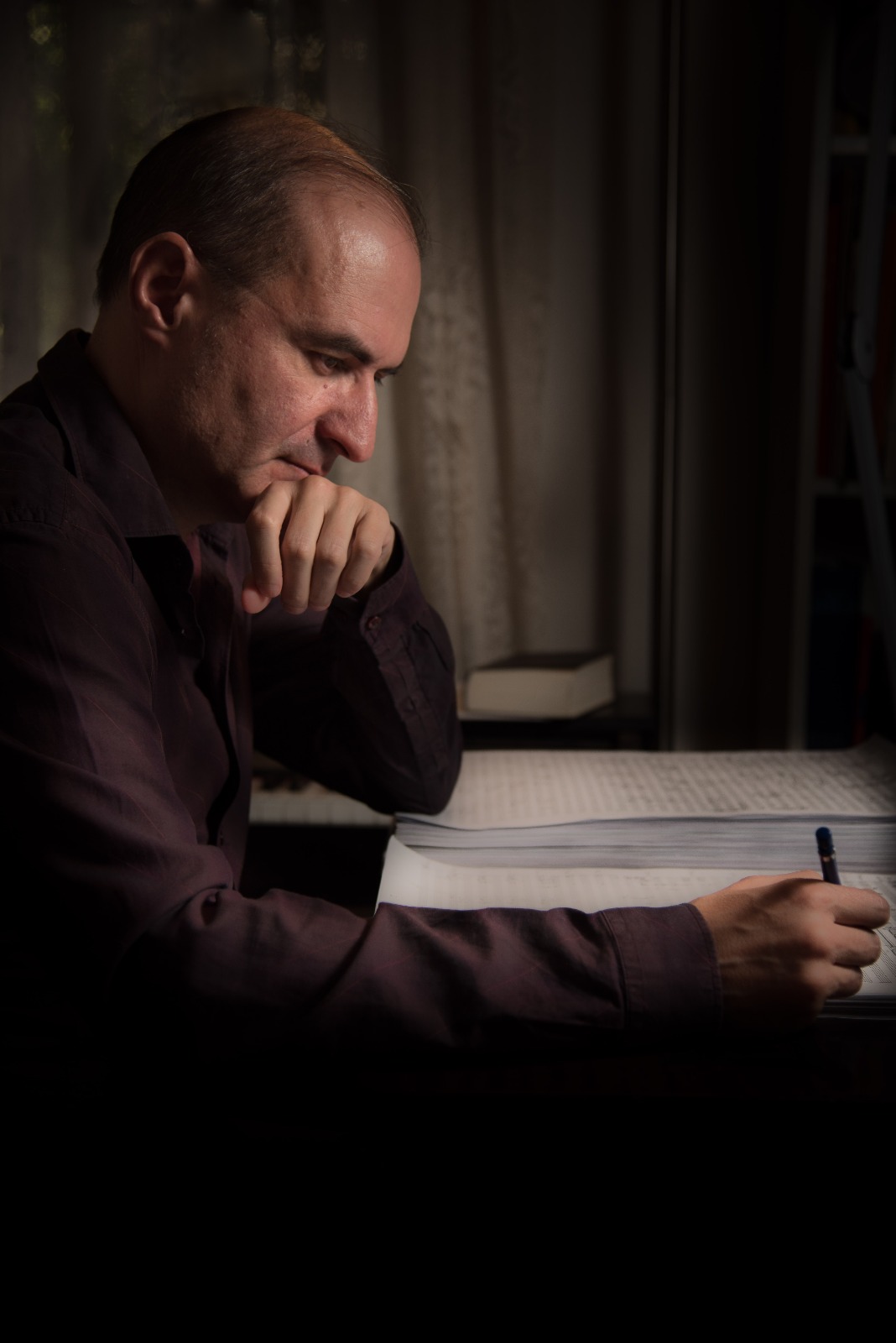
Jesus Torres
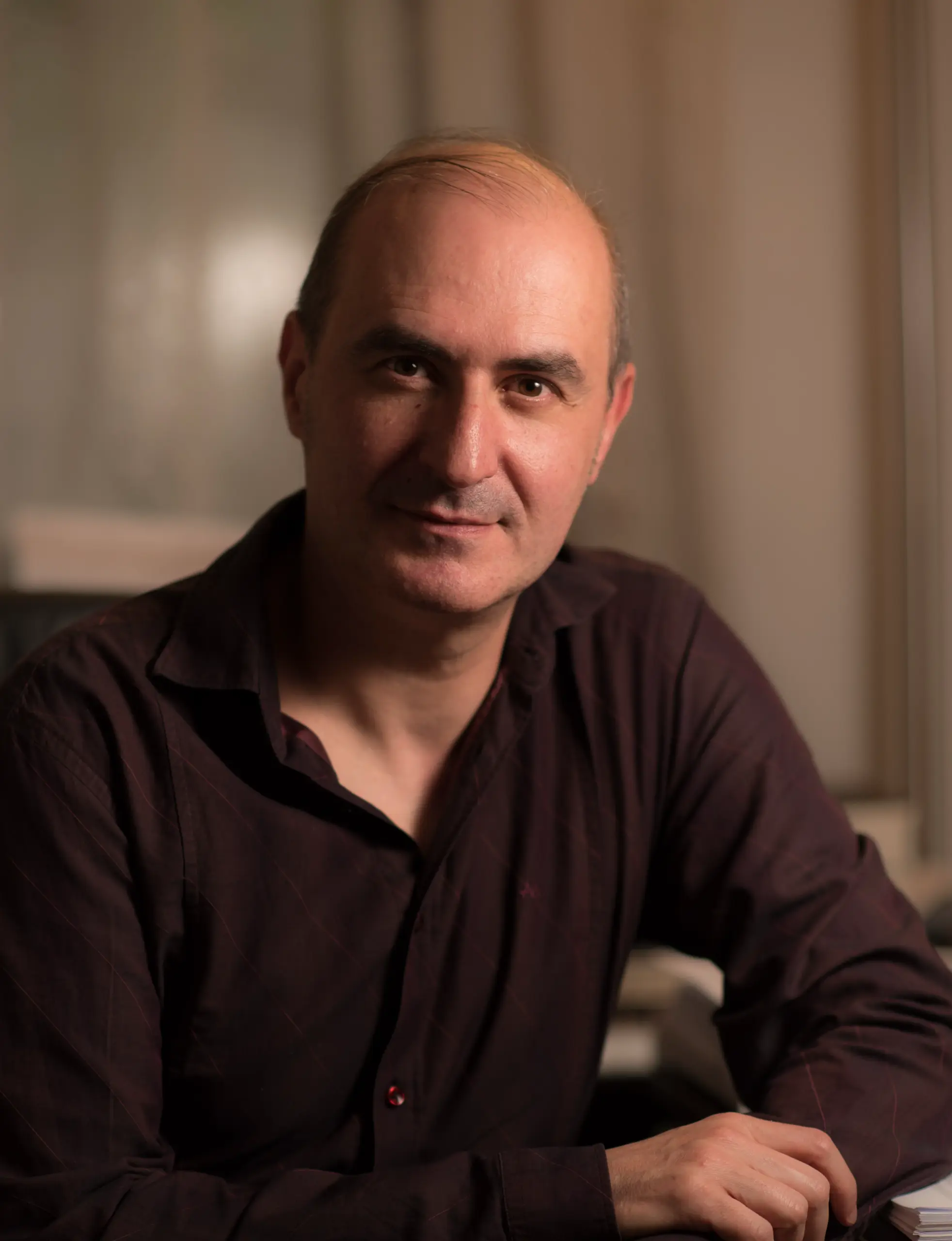
Jesús Torres was born in Zaragoza on 15 July 1965. He received his academic training at the Conservatorio Superior de Música de Madrid. At the same time, he attended several musical analysis courses with Luis de Pablo. Between 1986 and 1988, he studied composition with Francisco Guerrero.
His catalogue comprises 143 compositions, including twenty orchestral works, among them seven concertos: for piano, accordion, violin, percussion and clarinet, harpsichord, as well as Transfiguración, double concerto for cello, accordion and string orchestra. He has also written chamber works for a wide variety of instrumental ensembles. One of his most prominent interests is the setting of texts to music, with his ongoing engagement with the poetry of Vicente Aleixandre standing out in particular—44 poems set to music—as well as works by authors such as San Juan de la Cruz, Jorge Manrique, Luis de Góngora, Lope de Vega, Francisco de Quevedo, Gustavo Adolfo Bécquer, Rubén Darío, Juan Ramón Jiménez, Antonio Machado, Miguel Hernández, Juan Eduardo Cirlot, Leopoldo Panero, Antonio Carvajal and Alejandro Duque Amusco.
His music has been performed at festivals and concert series in numerous countries, including the Biennale di Venezia, Musica 99 Strasbourg, Musikfestspiele Saar, Ars Musica in Brussels, Ibermúsica, Radio France’s Présences 2000, the Sibelius Academy in Helsinki, the Kuhmo Festival, the ISCM Festival (Copenhagen and Bucharest), the Festival de Alicante, and the UNESCO International Rostrum of Composers (2001 and 2008).
It has also been performed at PRIX Italia, the Royal Academy in London, Prague Premieres 2008, the Festival Puentes in Mexico, the Festival Latinoamericano de Caracas, Gare du Nord in Basel, Konzert Theater Bern, Wiener Konzerthaus, Ultraschall Berlin, the Sound Ways Festival in St Petersburg, the Lucerne Festival, the Foro Internacional de Música Nueva Manuel Enríquez, the Quincena Musical Donostiarra, the Festival Internacional de Santander, the Festival Internacional de Música y Danza de Granada, the Transart Festival, the Marvão Festival and the Schwetzinger Festspiele, among others.
He has received commissions from numerous public and private institutions, including INAEM, the Gaudeamus Foundation (Amsterdam), Fundación SGAE, the Kaleidoscope Programme of the European Union, the Community of Madrid, the Colegio de España in Paris, The Associated Board of the Royal Schools of Music, Orquesta Sinfónica RTVE, Orquesta Nacional de España, Joven Orquesta Nacional de España, FestClásica, Orquesta Sinfónica de Barcelona y Nacional de Cataluña, the Teatro de la Zarzuela, Semana de Música Religiosa de Cuenca, Fundación Hazen Hosseschrueders, the Program for Cultural Cooperation (University of Minnesota), the State Society for Cultural Commemorations (SECC), Fundación Siglo, Siemens Stiftung, Fundación BBVA, Fundación Teatro Real, the Otoño Musical Soriano Festival, Fundación Ibermúsica and the Staatskapelle Dresden, as well as a wide range of performers.
He has received numerous awards, including the Premio SGAE (Madrid, 1992), the Gaudeamus Prize (Amsterdam, 1995), the Valentino Bucchi Prize (Rome, 1997), the Premio Reina Sofía (Barcelona, 1999), the Millennium Chamber Players Prize (Chicago, 2008), and the Premio Nacional de Música (2012). He was composer-in-residence with the Joven Orquesta Nacional de España during the 1998–1999 season. Since 2002, all of his works have been published by Tritó Edicions in Barcelona and are featured in numerous recordings released by labels such as Naxos, Kairos, IBS Classical and Tritó.
Among his works are: Sinfonía (2005), for the 40th anniversary of the creation of the Orquesta Sinfónica de RTVE; Faust (2008), orchestral music for the screening of F. W. Murnau’s 1926 silent film, premiered at the Teatro de la Zarzuela in Madrid; Evocación de Miguel Hernández (2010), for soprano, choir and orchestra, composed for the centenary of the poet’s birth and first performed at the Festival de Alicante; Apocalipsis (2011), for Gregorian choir, double choir and instrumental ensemble, with texts by Saint John, commissioned by the 50th Semana de Música Religiosa de Cuenca; Libro de los secretos (2003/2011), commissioned by the Fundación Autor for the OBC and premiered at L’Auditori in Barcelona; Concierto para violín y orquesta (2011), commissioned by the Fundación BBVA and premiered at the Teatro Monumental in Madrid; the large choral cycle Aleixandre-Coros begun in 2014; Sonetos (2014-2015), for choir and orchestra, commissioned by the Orquesta y Coro Nacionales de España; Folías de España (2015), commissioned by the Orquesta Sinfónica de Castilla y León; Dos poemas de Antonio Carvajal (2016), commissioned by the Festival Música Sur, and Malagueña ausente, commissioned by the Ernst von Siemens Musikstiftung to celebrate the 20th anniversary of the Trío Arbós.
In 2015, he received one of the Becas Leonardo from the Fundación BBVA for the composition of two new orchestral works. In addition, he was awarded the 8th AEOS/Fundación BBVA Prize for his orchestral work Tres pinturas velazqueñas. He was appointed composer-in-residence of the CNDM for the season 2017/2018. Magazine Sibila. Issue No. 52 (October 2017) of Sibila: Revista de Arte, Música y Literatura was dedicated to him, accompanied by the release of a monographic CD. In 2019, he was appointed composer-in-residence of the Orquesta Sinfónica Ciudad de Zaragoza. The Teatro Real commissioned his first opera, Tránsito, based on the homonymous work by Max Aub, which premiered during the 2020/2021 season at the Teatro Real.
The Orquesta Sinfónica del Principado de Asturias, together with the Fundación SGAE, commissioned him to compose Final for voice and orchestra, based on poems by Alejandro Duque Amusco. Likewise, the Ernst von Siemens Musikstiftung and the BRANDNEU 2022 Organ Festival in Kassel commissioned his first work for organ, Introspección. The Sociedad Española de la Guitarra commissioned him to compose a new work for guitar, Himno a la tristeza, for publication in the magazine Roseta.
The Teatro Real in Madrid commissioned his second opera, Tejas verdes, which premiered in 2025. That same year, five new vocal works were premiered: Coplas (based on texts by Jorge Manrique), Oda (Vicente Aleixandre), Tres poemas de Tejas verdes (Miguel Hernández), Cantares de Machado and Eternidades (Juan Ramón Jiménez). Su primera ópera, Tránsito, recibió en 2024 el Premio Impulso a la Mejor Propuesta de Nueva Creación Lírica en la VII edición de los Premios Ópera XXI.
In 2025, he completed a new work for ensemble, Concertante, commissioned by the CNDM to commemorate the 150th anniversary of the birth of Manuel de Falla and the 30th anniversary of the Trío Arbós. The work will be premiered in 2026 at the Museo Nacional Centro de Arte Reina Sofía in Madrid. In December 2026, Tránsito will be performed again as part of the 2026/2027 season of Ópera de Tenerife.
In 2026, he completed a new orchestral work, Memorial, commissioned by the Staatskapelle Dresden to commemorate the bicentenary of the death of Ludwig van Beethoven. Its premiere is scheduled for April 2027, as part of a tour that will visit Dresden (Semperoper), Vienna (Wiener Musikverein), Barcelona (Palau de la Música Catalana), Valencia (Palau de la Música), and Madrid (Auditorio Nacional de Música). His latest compositions include Incantatio, for alto saxophone and piano, commissioned by INAEM for Ismael Arroyo, Lux in tenebris, an accordion duo composed for Iñaki Alberdi and Marko Sevarlic, and Silente, for voice, vibraphone, harp, and piano, based on a poem by Aleixandre.
Jesús Torres lives in Madrid and is represented by Ibermúsica Artists.